AfroTada
AfroTada is an online publishing platform that showcases African content. It’s a repository of articles, literature, and art written and created by African contributors.
I owned end-to-end design across two areas: the reader-facing platform where audiences discover and read content, and the contributor, editor, and admin platforms where writers submit articles and the AfroTada team manages publishing.
My work covered both halves of the business: designing the experience that drew readers in, and designing the tools that let contributors publish and the team manage everything behind the scenes.
Selected projects from my time at AfroTada.
AfroTada Website Redesign
ABOUT THE PROJECT
A complete redesign of AfroTada's platform that showcases African content (articles, literature, art and so on). The redesign refreshed both the visual identity and the user experience while preserving the platform's African-inspired character.
PROBLEM
The existing site was functional but felt outdated, with a lemon-green background and bright hues that no longer reflected a modern reader experience. User research surfaced two clearer pain points beneath the visual issue. First, users wanted to access content faster without having to navigate back to the homepage to switch between categories. Second, the site wasn't responsive across devices.
MY ROLE
Lead Product Designer. I pitched the redesign and led it end-to-end, running user research, wireframing, creating the UI kit, designing high-fidelity mockups, A/B testing the new design against the old, and partnering with engineering on accessibility implementation.
SOLUTION
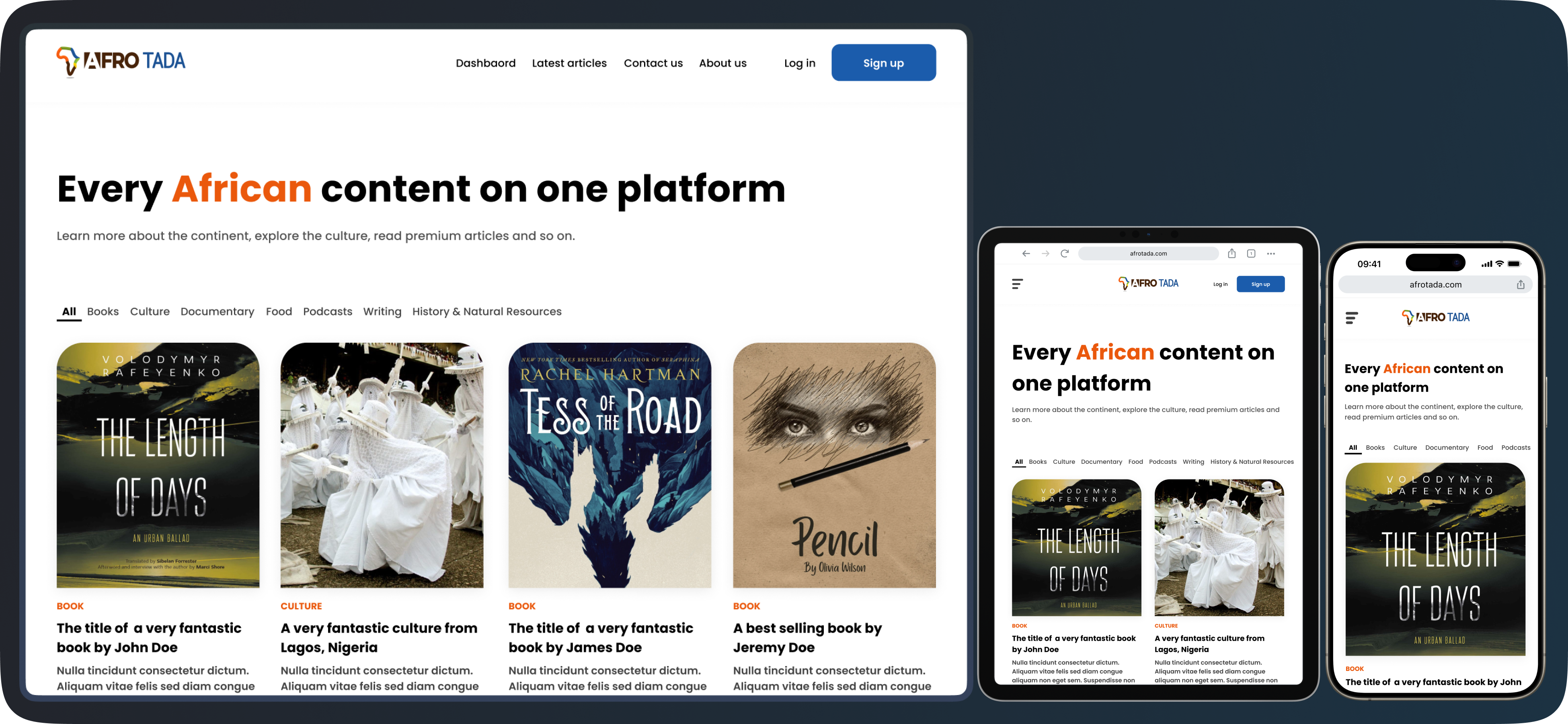
I designed a modern interface that kept AfroTada's vibrant African colour palette while overhauling the experience around it. Category filters at the top of the homepage replaced the old grid layout, letting users switch between content types in a single click instead of returning to the homepage each time. The homepage now surfaces more articles on initial load, with a "See more articles" pattern that keeps users on the same page rather than navigating away. Layouts were fully responsive across desktop, tablet, and mobile.
The redesign also introduced an interactive African map on desktop where users can click into any country to read articles tied to it, turning navigation into a discovery experience.
Accessibility was built in from the start: keyboard navigation, semantic HTML for screen reader support, considered colour contrast, and readable font sizing.
IMPACT
Visits surged 65% in the first week after launch, with a 39% lift in average monthly visitors compared to the previous version of the site. An A/B test against the old design showed 12 of 15 participants preferred the new version.
AfroTada Publishing Dashboard
ABOUT THE PROJECT
A new set of dashboards (contributor, editor, and admin) built for AfroTada to replace its manual, email-based content workflow with a self-service publishing system. Contributors could now write, save drafts, and submit articles directly on the platform; editors could review and approve submissions; admins had additional controls over users, content categories, and article assignments.
PROBLEM
AfroTada's content workflow was entirely manual. Contributors emailed articles as Word documents to the team, and engineers had to hand-code each one into the website. This was slow, created bottlenecks, and put a heavy burden on the engineering team for a process that should have been routine. It also made contributing feel high-friction for outside writers, they submitted articles into a black box and waited.
MY ROLE
Lead Product Designer. I led design end-to-end, brainstorming and wireframing the dashboard concept, designing high-fidelity mockups for all three dashboards, conducting user testing with contributors and admins, and iterating based on feedback (including adding an article reassignment feature for admins that surfaced during testing).
SOLUTION
Three connected dashboards with progressively expanding capabilities.
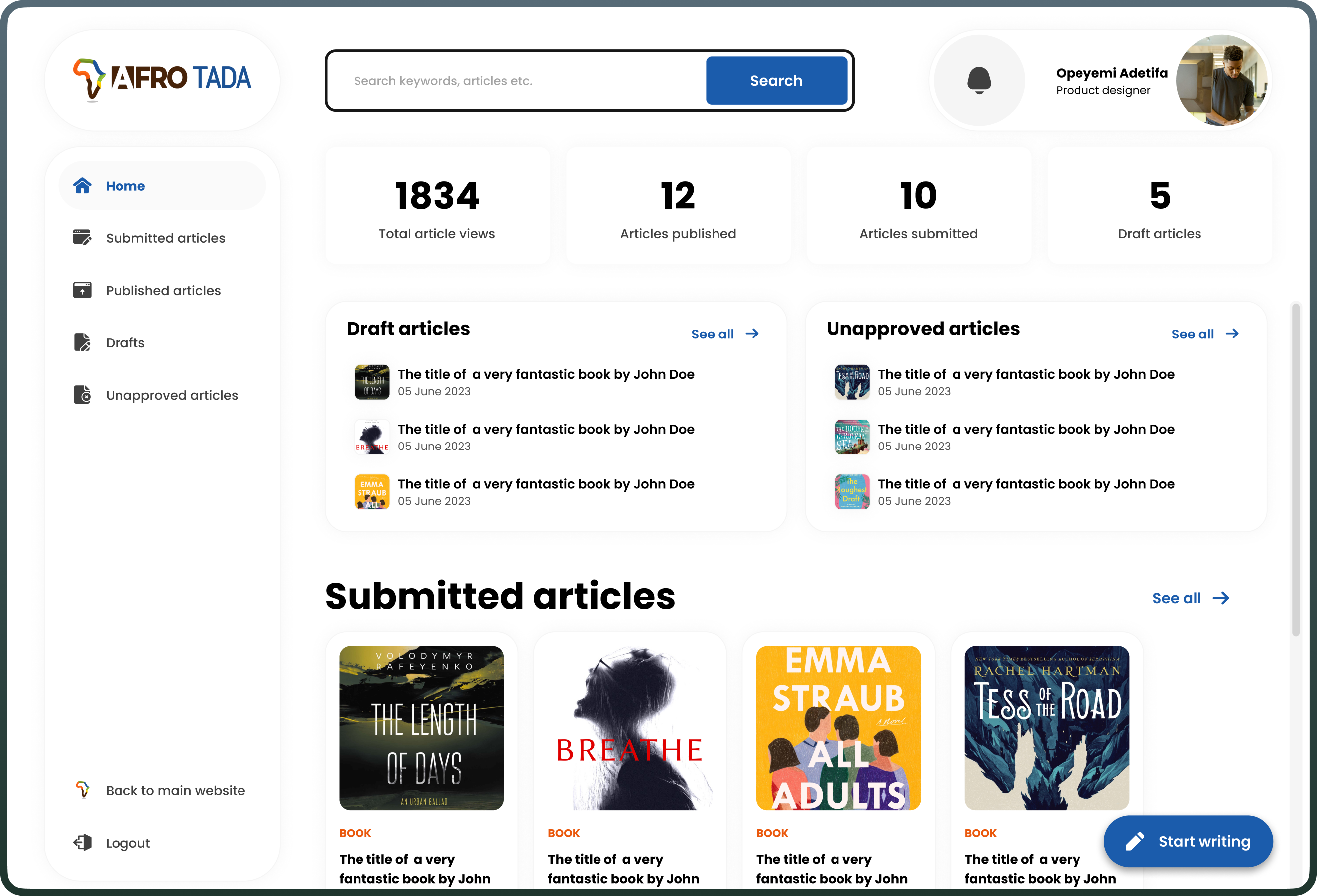
Contributors get a dashboard where they could write articles directly in a built-in editor that previewed exactly how the article would look when published, save drafts to return to later, categorise content, upload a main image via drag-and-drop, and track engagement metrics on their published articles.
Editors get everything contributors had, plus the ability to review, approve, or reject submissions in a scannable table view.
Admins get everything editors had, plus tools for user management, creating and managing content categories (like countries and regions), and reassigning articles between contributors.
All three followed a consistent left-sidebar navigation pattern and used progressive disclosure, surfacing summaries on the main views and letting users drill down for detail, to keep the experience focused rather than overwhelming.
IMPACT
The dashboard achieved its primary goal of streamlining the publishing workflow, eliminating the manual handoff between contributors, the product team, and engineers. The unexpected outcome was a 3x increase in the number of contributors on the platform, by making submission self-service, AfroTada quietly lowered a barrier that had been suppressing contribution all along.